
NATIONAL CAPABILITY
National capability. Personal accountability.
National security delivery does not need to mean layers of offices, handovers and people who do not know your environment.
Safeguard combines Melbourne-based technical leadership and customer knowledge with carefully selected security technicians and service partners around Australia.
The result is national reach with a consistent Safeguard approach—one relationship, one set of standards and technical oversight that stays close to the customer.
NATIONAL CAPABILITY IN PRACTICE
National capability in practice.
Figures are anonymised and describe current programs and supported environments. Customer identities, site lists and protected system details remain confidential.
Our national capability grew with our customers.
Safeguard did not begin with a strategy to build a national footprint.
It grew through long-term trust. As customers expanded, they asked Safeguard to support more of their locations while retaining the standards, knowledge and accountability they already relied on. Individual corporate sites became multi-site portfolios, and multi-site portfolios became national security environments.
We initially opened operations in Sydney and Canberra. That experience taught us an important lesson: a national service does not necessarily become better because the provider carries the overhead of a traditional branch in every state.
So we developed a different model built around consistent standards and central technical ownership.
Keep the knowledge close.
Keep the standards consistent.
Put capable people on the ground when they are needed.
A DIFFERENT NATIONAL MODEL
Central leadership. Established local capability.
Safeguard keeps key personnel, technical leadership, standards and customer knowledge centred in Melbourne.
Around Australia, that capability is supported by an established network of security technicians who have worked within Safeguard's national delivery model over many years and provide local onsite expertise when physical attendance is required.
The principle remains the same today: keep responsibility for the customer and the security outcome close, while using capable local resources where the work needs to happen.
A national portfolio should not become a collection of unrelated security systems.
Safeguard works toward consistent architecture, programming, naming, documentation, user administration, monitoring and support standards across the organisation.
Individual sites can still reflect their own risks and operating requirements, but the wider environment remains recognisable and manageable.
That consistency matters when staff move between locations, when new sites are added, when incidents need to be investigated and when technical support is required.
CENTRALISE WHAT CAN BE CENTRALISED
Do not manage every site as an island.
Depending on system design, access control, intrusion, CCTV, monitoring, event history, system health and technical administration can be centrally visible or remotely supported through enterprise platforms.
Safeguard uses that capability to retain technical oversight, investigate appropriate faults remotely and coordinate onsite attendance when physical work is actually required.
The objective is not to avoid local service. It is to use local attendance where it adds value.
Built, tested and connected before it reaches site.
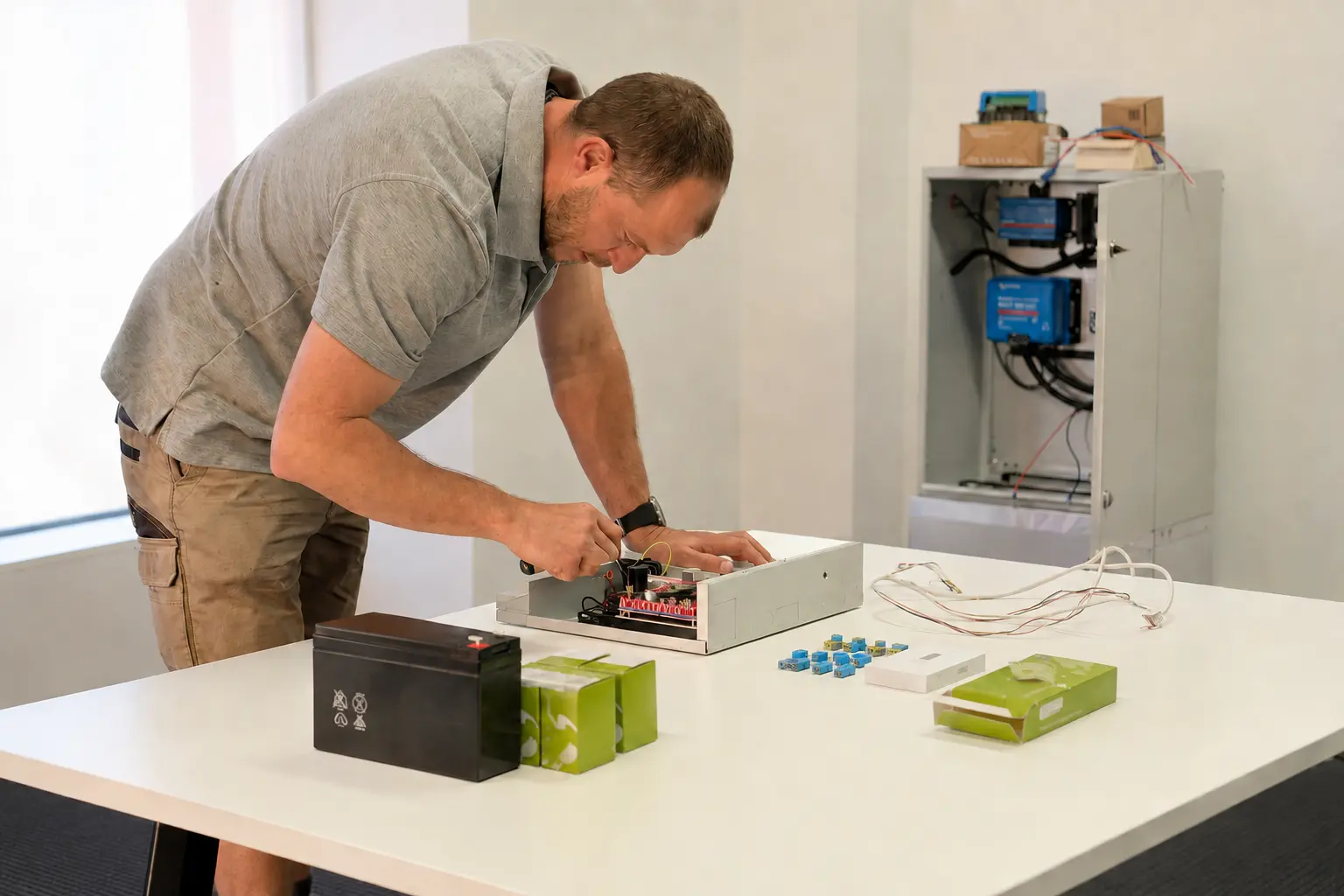
Safeguard assembles and pre-commissions suitable security systems off site in the same configuration in which they will operate after installation.
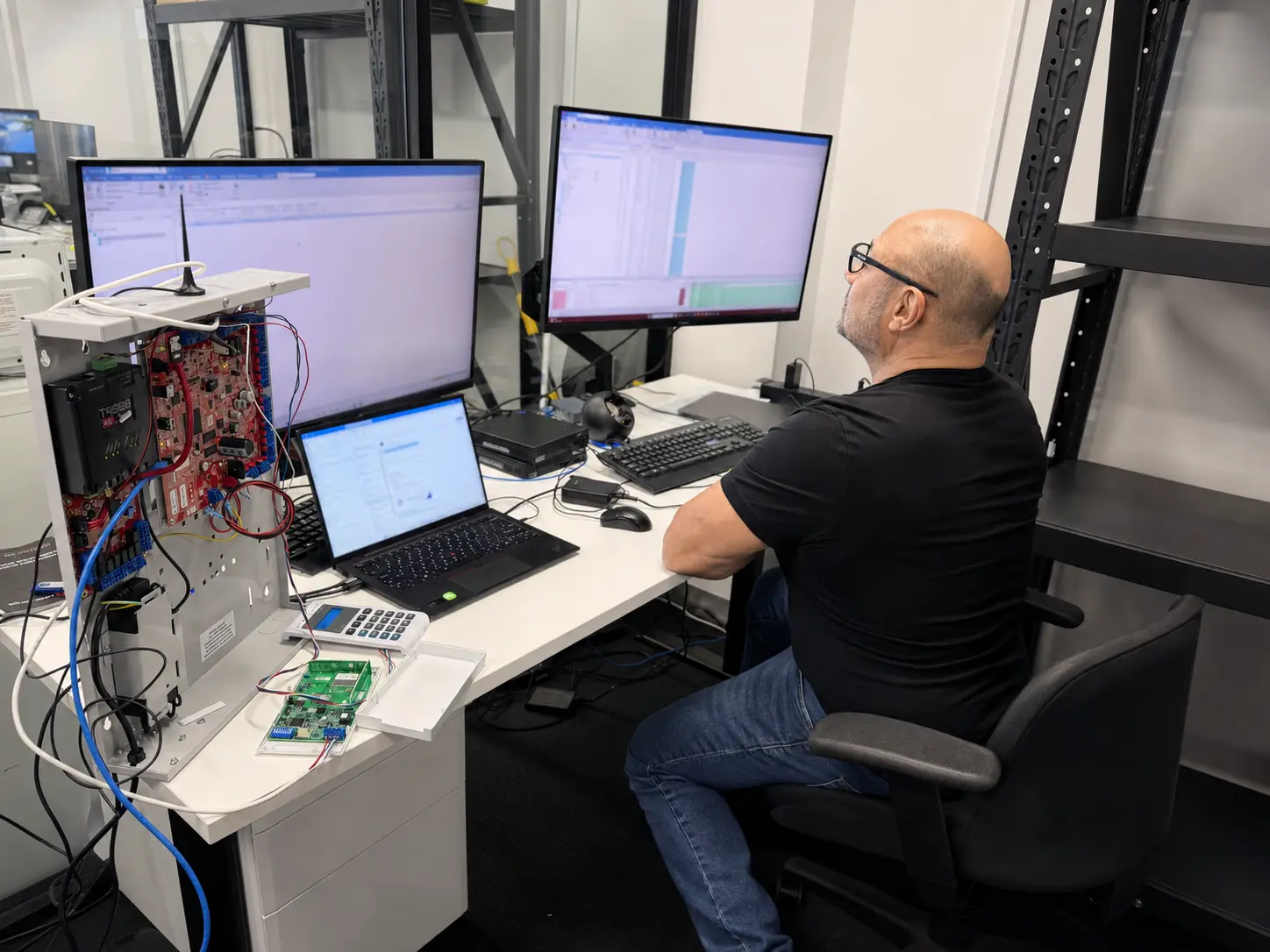
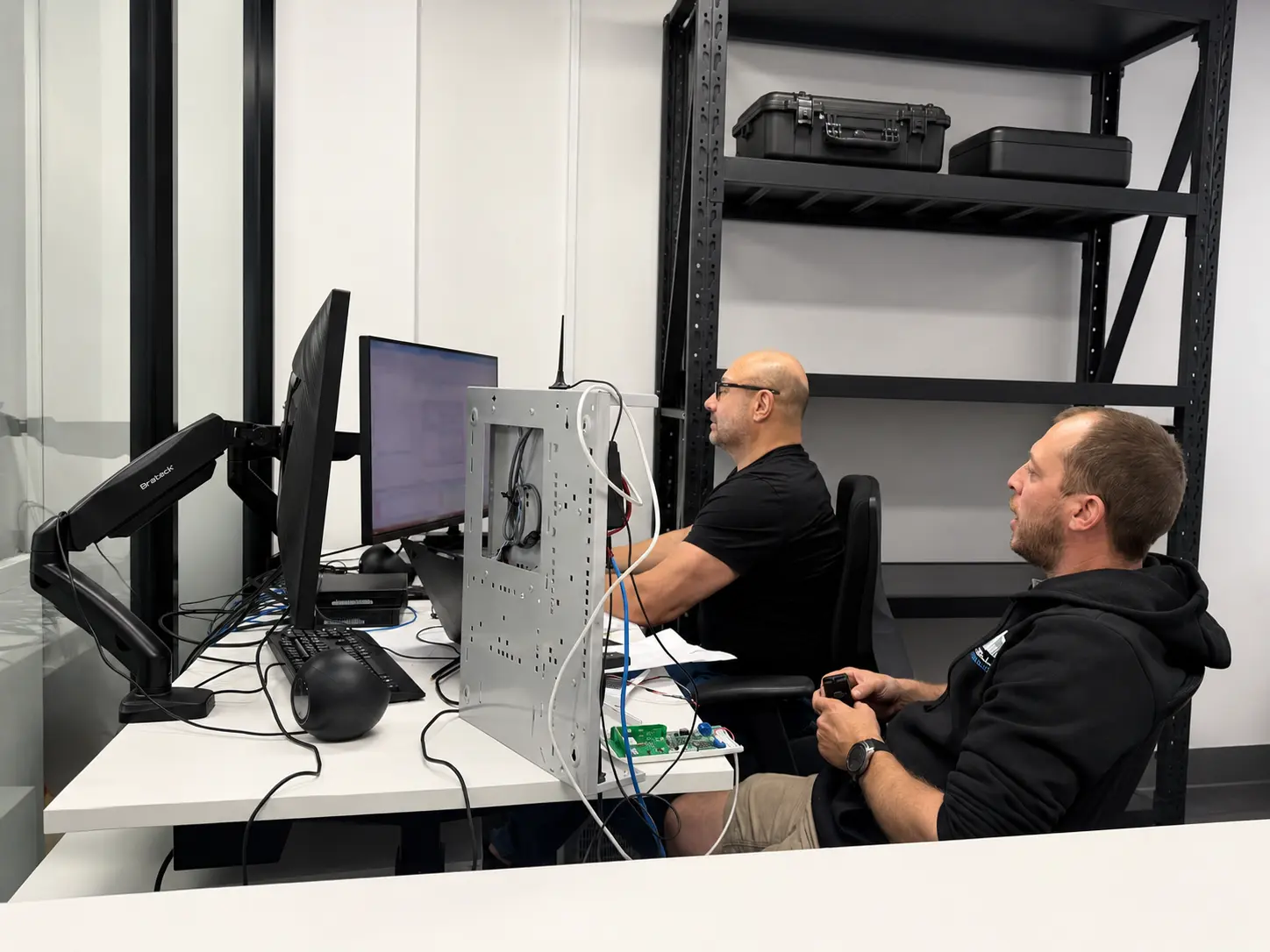
Before equipment is dispatched, the system is powered, programmed and tested. We connect it to the customer's server environment—including infrastructure hosted within our data centre where applicable—and establish the required Ethernet and cellular/GPRS pathways to the alarm monitoring network.
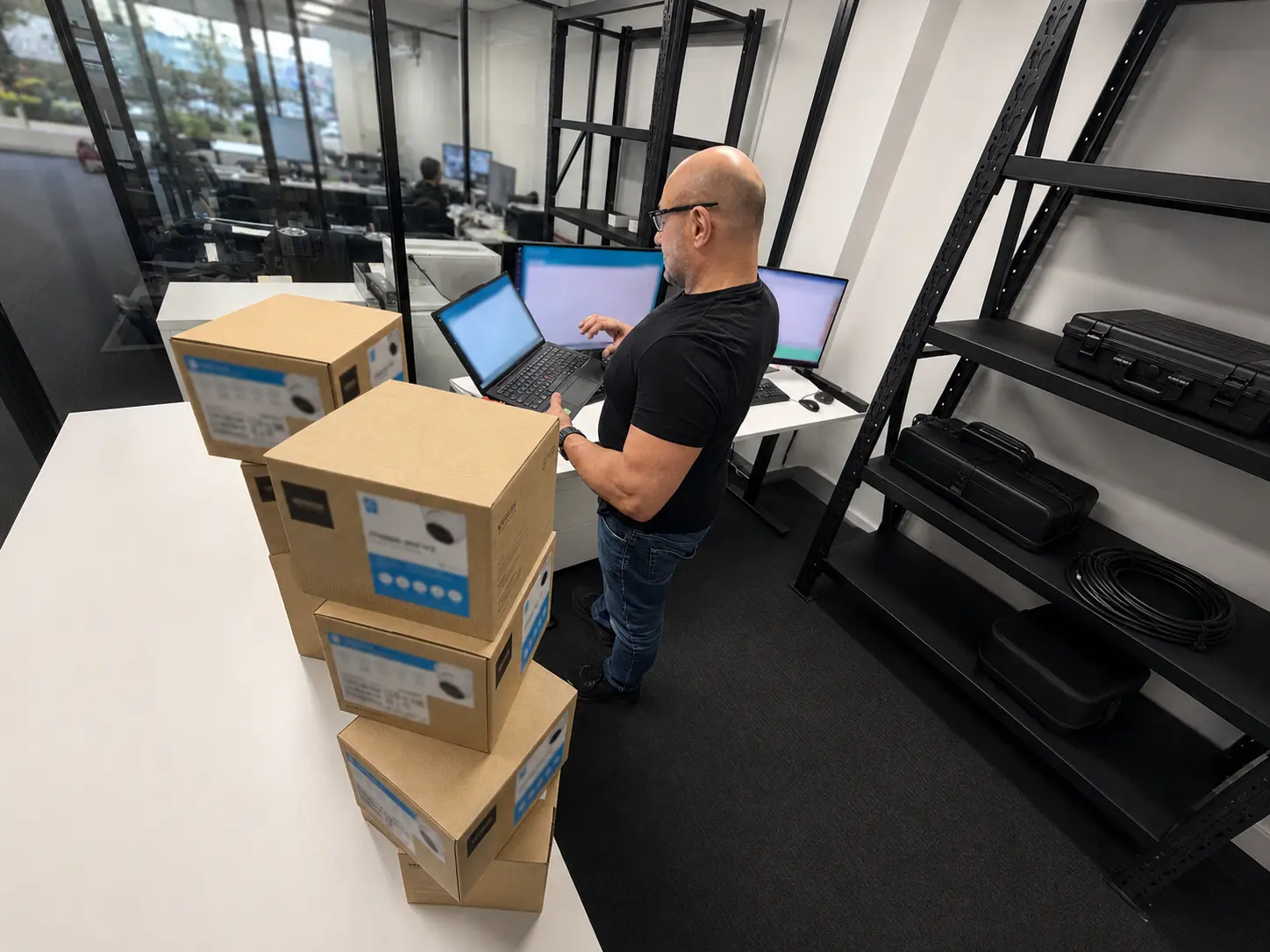
Where the solution includes operator or mobile applications, we configure the apps and enrol the system with the required monitoring platform. This allows Safeguard to confirm that controllers, communications, software, applications and monitoring connections are operating correctly before the equipment reaches site.
Once installed and connected, the system can come online within the established network environment. Onsite commissioning then concentrates on checking every field device and confirming complete end-to-end operation.
This is not an occasional project method. It is how Safeguard prepares suitable systems every day.
PRE-DEPLOYMENT SYSTEM COMMISSIONING
Replicate the operating environment. Prove the system. Then deploy.
- System design & hardware selection
- Off-site assembly
- Programming & configuration
- Server & network integration
- Monitoring enrolment
- Pre-deployment testing
- Onsite device verification
- Ongoing management & support
Pre-deployment engineering reduces avoidable field configuration and provides a known starting point. Final onsite installation, device testing and end-to-end verification remain essential.
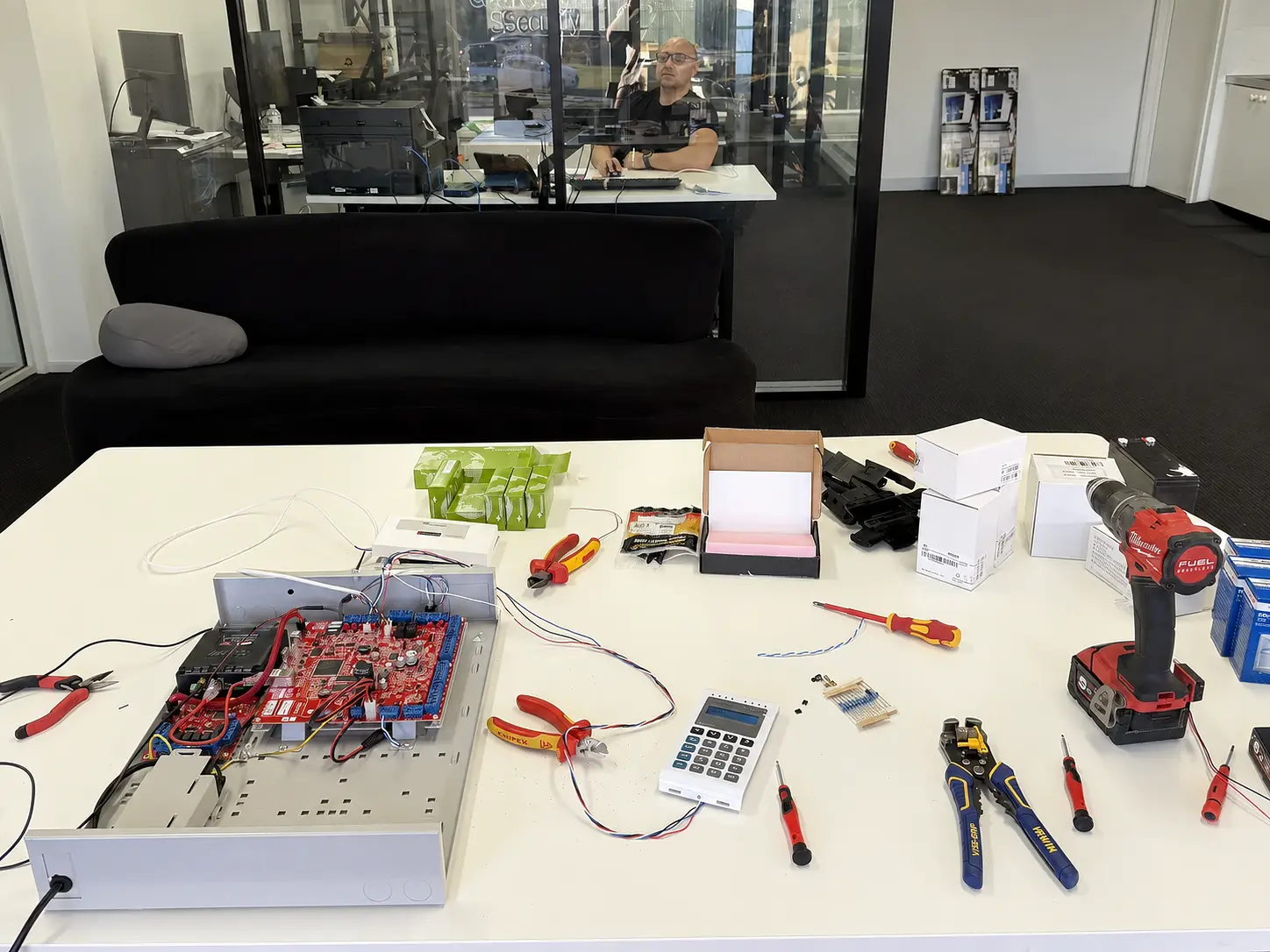
National delivery still needs project leadership.
Safeguard's Melbourne project team coordinates with builders, customer representatives and onsite personnel, manages site requirements and inductions, supports technicians through delivery and helps maintain consistency from one location to the next.
At completion, a Safeguard representative can attend for project handover, end-user training and agreed operating procedures.
LOCAL WHEN IT NEEDS TO BE LOCAL
Some security work can be managed remotely. Some cannot.
A failed lock, damaged camera, cabling problem, new installation or physical site assessment requires somebody competent onsite.
Safeguard coordinates established local technicians for those requirements while retaining the customer relationship, technical context and overall responsibility for the work.
National reach should not mean introducing a stranger every time something needs to be done.
Safeguard's national model is not built around finding a security contractor whenever a job appears in another state.
Many technicians supporting our interstate customers have worked with Safeguard since the national delivery model was established and understand our technical standards, methods and, in many cases, the customer's existing environment.
National projects require more than booking technicians in different cities.
A successful rollout needs an agreed design standard, pre-deployment engineering and testing, site information, equipment and programming standards, logistics, builder and induction coordination, installation, commissioning, documentation, monitoring transition, handover and a process for dealing with differences at individual locations.
Where a portfolio is inherited rather than newly built, Safeguard can assess the existing sites and develop a staged pathway toward greater consistency.
ONGOING NATIONAL SUPPORT
Finishing the rollout is not the end of the relationship.
Safeguard's national model is designed around retaining knowledge of the customer's systems, history, standards and expectations over time.
Monitoring profiles, programming, remote support, system health, service coordination, audits, lifecycle planning and future projects can all draw on that accumulated knowledge.
GROW WITHOUT REINVENTING SECURITY
A new site should not have to start again from zero.
A well-designed national architecture gives new sites a known starting point: established platforms, naming conventions, monitoring arrangements, access structures, support processes and technical standards.
The site can then be adapted for its specific risk and operational requirements while still becoming part of the customer's wider security environment.
That is how national capability becomes scalable rather than simply widespread.
WHAT NATIONAL CAPABILITY MEANS AT SAFEGUARD
National reach without losing technical ownership.
Central Technical Leadership
Key technical knowledge, design standards and customer context retained within Safeguard.
National Onsite Capability
Established interstate technicians who know Safeguard's standards and develop familiarity with supported environments.
Multi-Site Security Design
Security architecture developed for portfolios rather than isolated individual sites.
National Project Coordination
Design, logistics, installation, commissioning, transition and documentation coordinated across locations.
Centralised Enterprise Platforms
Appropriate access control, CCTV and security functions managed through consistent enterprise environments.
24/7 Monitoring & Remote Technical Support
Centralised monitoring plus diagnostics, programming, event review and administration where connectivity and platform capability allow.
System Health & Consistent Standards
Supported faults reviewed centrally, with common naming, programming, monitoring, documentation and support principles.
Lifecycle & Growth Planning
A framework for new sites, upgrades, ageing infrastructure and changing requirements.
Pre-Deployment Engineering
Assembly, network preparation, pre-programming and testing of key equipment in Melbourne before deployment.
Project Leadership & Handover
Coordination with builders and site teams, commissioning support, final handover, end-user training and agreed procedures.
THE SAFEGUARD NATIONAL PRINCIPLE
Never let national scale become an excuse for losing accountability.
EXPERIENCE WITHOUT EXPOSURE
National portfolios contain information that should stay with the customer.
Safeguard publishes only customer-approved or deliberately anonymised scale evidence. Customer names, logos, national site lists, system layouts, network information and other sensitive operational detail remain protected unless publication is explicitly approved.
RELATED CAPABILITIES
DISCUSS YOUR NATIONAL PORTFOLIO
One site or one hundred. You should still know who is responsible.
Whether you are expanding into new locations, trying to standardise an inherited portfolio or looking for a national security partner that can stay close to the detail, Safeguard can help develop the model, systems and support structure around your organisation.